Table of Contents
Neon colors have long been synonymous with the pulsing energy of urban nightlife and cutting-edge technology. From the classic glass tubes of the mid-20th century to the sophisticated LED scrollers of today, the science behind these vibrant hues is as fascinating as the visuals themselves. Understanding how neon colors function in modern displays is crucial for designers, marketers, and tech enthusiasts alike.
The Physics of Luminescence
Luminescence is the emission of light by a substance not resulting from heat. In the world of neon, this is achieved through electrical discharge. When high voltage is applied to a sealed glass tube containing gas, the electrons collide with gas atoms, exciting them to a higher energy state. As they return to their ground state, they release energy in the form of photons—light.
The Role of Noble Gases
While we call them all "neon," different gases produce different primary colors. Pure Neon gas emits a classic red-orange glow. Argon, when mixed with a drop of mercury, produces a brilliant blue. To achieve the full spectrum of a modern LED scroller, these principles are mimicked using semiconductor materials that emit specific wavelengths of light.
Evolution to LED Technology
The transition from fragile glass tubes to LED neon has revolutionized digital signage. Modern LED technology allows for flexible strips that can mimic the look of traditional neon while being more energy-efficient, durable, and capable of displaying millions of colors through RGB mixing.
| Feature | Traditional Neon | LED Neon / Scrollers |
|---|---|---|
| Power Usage | High Voltage (3k-15k volts) | Low Voltage (12v-24v) |
| Durability | Fragile Glass | Impact Resistant Silicone/Acrylic |
| Color Versatility | Fixed Gas Color | Dynamic RGB/Programmable |
| Lifespan | 10,000 - 30,000 hours | 50,000+ hours |
Color Gamut and Saturation
Neon colors live on the outer edges of the visible color gamut. They represent highly saturated versions of primary and secondary colors. In digital displays, achieving these "unnatural" levels of saturation requires high-quality LED chips with narrow spectral distributions, ensuring the blue is electric and the pink is piercing.
The Psychology of High Contrast
Human eyes are naturally drawn to high-contrast environments. Neon colors against a dark background (like Slate-950) trigger an immediate physiological response. This is why "Cyberpunk" aesthetics are so popular—they utilize the maximum possible contrast to create depth and focus.
LED Scroller Dynamics
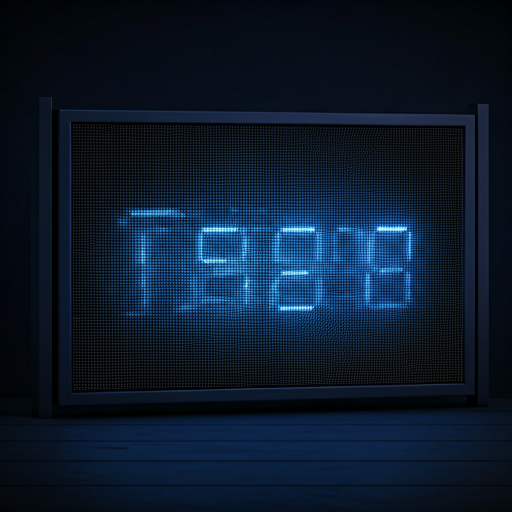
An LED scroller isn't just a static sign; it's a dynamic array. The science of persistence of vision (POV) allows us to perceive moving text and animations. By refreshing individual pixels at high speeds, these displays can create fluid motion and shimmering neon effects that are impossible with traditional tubes.
Digital Signage Optimization
To optimize neon colors for digital signage, one must consider ambient light levels. During the day, brightness must be maximized to overcome the sun. At night, pulse-width modulation (PWM) is used to dim the display while maintaining the vibrant "neon" saturation without flickering.
The Future of Neon Display Tech
OLED and Micro-LED technologies are the next frontiers for neon aesthetics. Because OLEDs can turn off individual pixels completely, they provide the "true black" necessary for neon colors to truly pop without the light-bleeding (blooming) common in standard LCD panels.
Design Tips for Neon UI
- Use Dark Backgrounds: Neon needs shadows to glow.
- Layered Glow: Apply multiple layers of soft drop shadows to simulate atmospheric glow.
- Complementary Pairs: Combine Electric Blue with Hot Pink or Neon Green with Dark Purple for maximum visual vibration.
- Typography: Use sans-serif fonts with slightly wider tracking to maintain legibility when glowing.